

选择正确的镜头和照明
成功安装机器视觉的关键步骤
-
- 选择检查所需的设备
- Choose the correct devices that meet the inspection requirements.
- 相机/ Controller / Lighting / Lens / Monitor
-
- Sensing and judgment
- Perform testing on the actual target with the machine vision system.
-
OK和NG产品的参考零件
Inspection cycle time
多种检查项目
-
- 选择安装位置和过程
- 查看特定的安装位置。
-
运动/静止的目标
环境条件,包括环境光和振动
-
- Controls for automation
- Review the I/O controls for the machine vision system.
- Image capture timing / Judgment output / PLC control / Data output
-
- 现场测试
- Test the machine vision system on the actual production line.
-
Fine setup adjustment
统计数据
I/O control check
-
- 了解基本操作
- Basic setup procedures to maintain stable inspection.
- Setting tolerances / Sensitivity adjustment / Changing the inspection settings / Item registration
LED lights are commonly used in machine vision image processing. There are three steps in the process of selecting the best lighting for the inspection requirements.
- Determine the direction of emission
- 确定照明类型和形状
- Determine the lighting color (wavelength)
标准照明类型(用于LED灯)
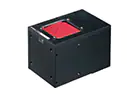 同轴
同轴
CA-DX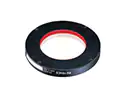
Low angle
CA-DL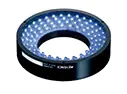
Direct ring
CA-DR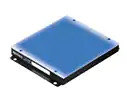
Backlight
CA-DS
Dome
CA-DD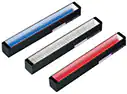
Bar
CA-DB


选择检查所需的仪器[轻/镜头选择]
Step 1:
Determining the direction of emission(specular reflection, diffuse reflection, transmission)
光的基础
当入射光(棕色箭头)撞到零件的表面时,光线会宽大地分离并在四个不同的方向上行驶。
- 镜面反射以相同的角度反射
- Diffuse reflected light that diffuses on the surface of the part
- 传输的光直通过零件
- 扩散的发射光,传输散射在整个零件表面的光线

Using the incident light as 100%, the ratio of light specularly reflected is called specular reflectance, the ratio of other reflected light is called diffuse reflectance, and the sum of the two is called total reflectance.
机器视觉中使用了三种主要的照明方向。
-
- 镜面反射类型
- Lens receives light that specularly reflected off the target, which works effectively with parts with reflective properties, such as a glass substrate.
-
- 扩散反射type
- 镜头接收光线均匀分布,而再保险leasing the specularly reflected light. This type is effective for inspections done through transparent tapes in order to ignore reflective parts.
-
- Transmission type
- Light is emitted from behind the target to detect the silhouette with the transmitted light. This type is useful for parts that easily pass light, such as non-woven fabric.

Point 1:
Determine the direction of the light based on the material/shape of the target and the inspection purpose. Select from three options: specular reflection, diffuse reflection, and backlighting.
Step 2: Determining the lighting type and shape
After determining the lighting direction, select the lighting type (model) based on the inspection requirements, background, and ambient environment. From the lighting options for each lighting direction, select the suitable lighting type as illustrated below.
| 每个照明方向的典型照明类型 | |||
|---|---|---|---|
| 镜面反射 | 同轴灯 | Ring light | Bar light |
| 扩散反射 | Low angle light | Ring light | Bar light |
| Transmission | Light source | Bar light | - |


Step 3: Determining the lighting color/wavelength
The final step is to decide the color of the lighting that works the best for the part and background. White is generally selected when using a color camera. However, when using a black-and-white camera, the following knowledge becomes more important.

Point 2:
Instead of trying every light without due consideration, you can select the correct one efficiently by following the procedure below:
- 确定哪种类型是合适的:镜面反射,漫射反射或背光。
- Decide on the shape (model) and size of the light.
- Decide on the color (wavelength) of the light.
Step 4: How to calculate the focal distance and field of view
其中一个镜头规格是焦距。Typical lens sizes used in factory automation include 8 mm 0.31", 16 mm 0.63", 25 mm 0.98", and 50 mm 1.97". You can calculate the working distance (WD), which is the point at which the camera comes into focus, from the field of view (FOV) and focal distance necessary for the target to be captured.

The WD and FOV values depend on the lens’ focal distance and image sensor size. For WDs greater than the minimum WD where a close-up ring is unnecessary, the WD can be estimated using the following proportion.
WD: Viewing angle = Focal distance: sensor size

步骤5:
How to increase the depth-of-field (range of heights at which the lens remains in focus)
- Lens with shorter focal distance has a greater range of depth.
- As the distance to the target gets farther, the deeper the range of depth becomes.
→请注意,使用特写戒指或宏观镜头时,深度场的深度较小。 - The smaller the opening of the aperture, the deeper the range of depth is.
→It is easier to obtain focus using aperture zoom and bright light.
此示例比较用较小的光圈和最大捕获的图像捕获。捕获带有胶带的目标时的光圈表示斜坡上的高度,如下图所示。

步骤6:基于镜头性能的对比度
The images on the right show the same target, captured using KEYENCE’s high-resolution lens CA-LH16 and standard lens CV-L16. The difference in the images derives from the differences in lens material and structure. Selecting a high-resolution lens depending on the application can provide images with higher contrast.
| Lens | CA-LH16/CV-L16 |
|---|---|
| 检查目标 | 复制纸 |
| Field of view | 60 mm 2.36" / Stain size: approx. 0.3 mm 0.01" |

点3:
通过遵循以下步骤选择镜头:
- 根据捕获大小和可能的安装距离来确定焦距。
- Estimate the necessary depth of field based on the shape of the target.
- 根据检查准确性选择是使用高分辨率镜头还是标准镜头。


